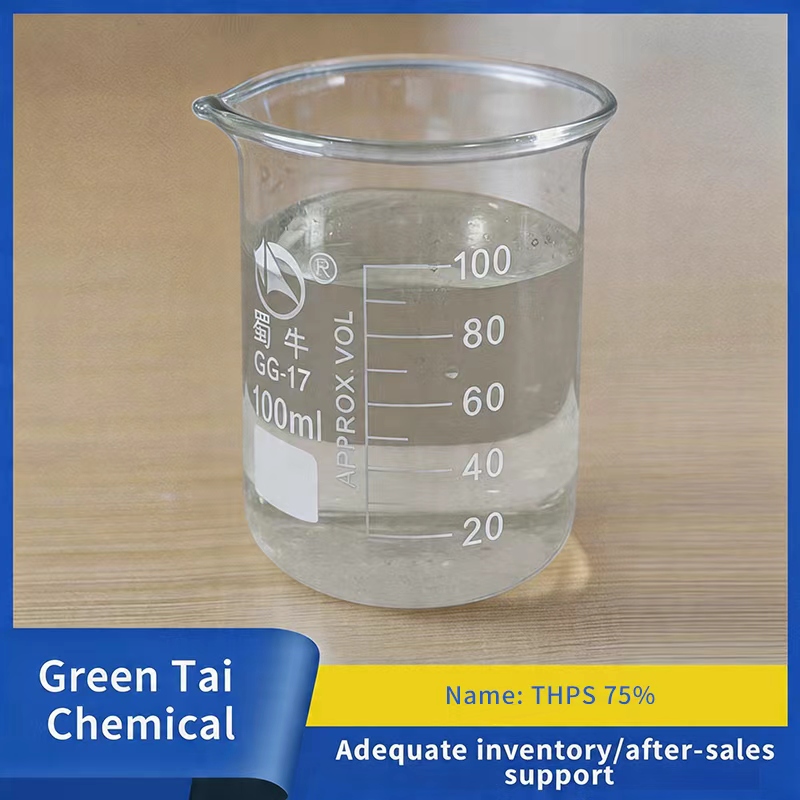
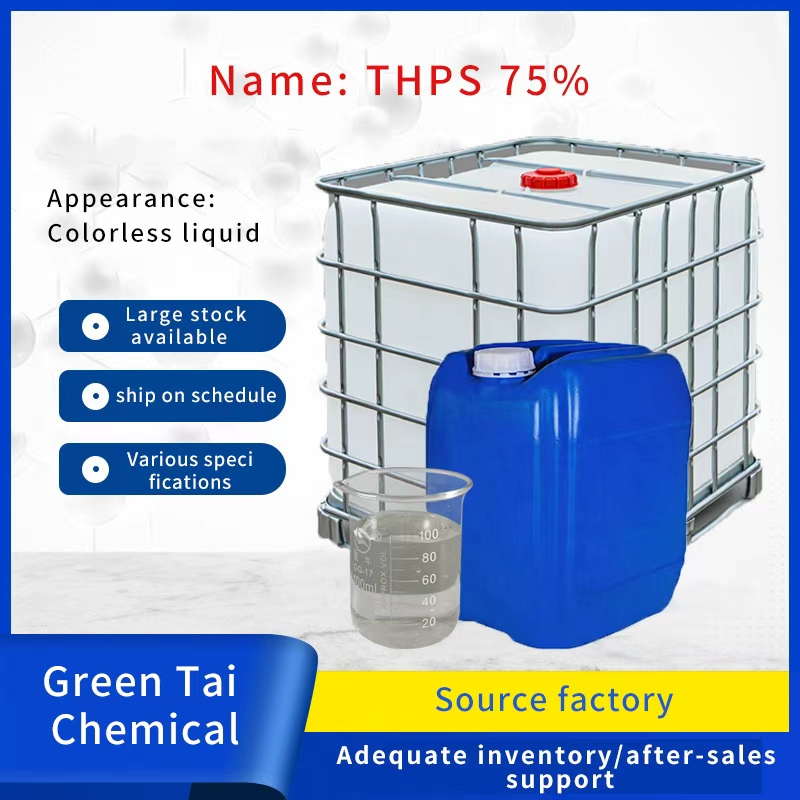
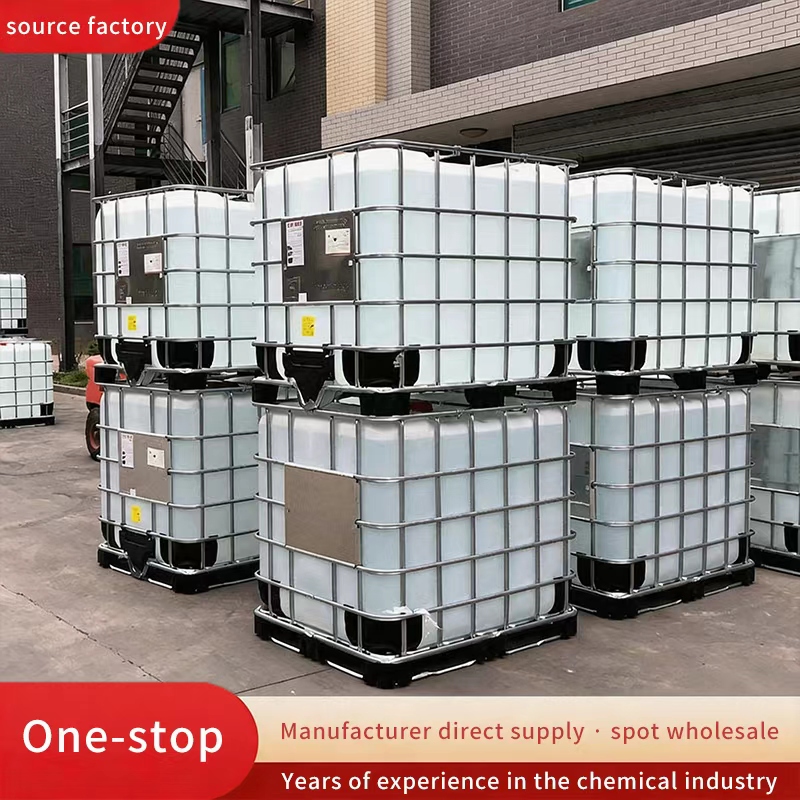
Tetrakis (hydroxymethyl) phosphonium sulfate (thps) 75%
CAS No.: 55566-30-8
Molecular formula: C8H24O12P2S
Molecular weight: 406.28
Appearance: liquid
THPS 75% Specification:
THPS 75% Scope of application:
Tetrakis (hydroxymethyl) phosphonium sulfate or Thps 75% is a powerful broad-spectrum microbiocide used in the oilfield and water treatment, also can be used in flame retardant for textile. THPS (Tetrakis hydroxymethyl phosphonium sulfate) is a widely used biocide in the oil and gas industry for microbial control.
Here are some of the most common applications of THPS in this industry:
1. Fracturing fluids: THPS is used in hydraulic fracturing fluids to control the growth of bacteria and other microorganisms that can cause blockages and reduce the efficiency of the fracturing process.
2. Drilling fluids: THPS is added to drilling fluids to prevent the growth of bacteria and fungi that can cause corrosion of drilling equipment and wellbore damage.
3. Produced water treatment: THPS is used for the treatment of produced water to control the growth of microorganisms that can cause fouling, corrosion, and scale formation in water treatment systems.
4. Pipeline and storage tank treatment: THPS is added to pipelines and storage tanks to prevent the growth of microorganisms that can cause corrosion and blockages.
5. Enhanced oil recovery: THPS is used in enhanced oil recovery processes to control the growth of microorganisms that can cause blockages and reduce the efficiency of the recovery process.
Scope of Application:
Tetrahydroxymethylphosphate sulfate is a green and environmentally friendly quaternary phosphate fungicide, and is also internationally recognized as a permanent flame retardant for pure cotton and polyester cotton fabrics.
1.Tetrahydroxymethylphosphate sulfate is mainly used as a biocide.
2. Widely used in water chemical processing, oil fields, papermaking and other industries. Because its main advantage is that it quickly degrades into completely harmless substances after use, greatly reducing the impact of this industry on the environment.
3. It can also be used as a permanent flame retardant for pure cotton and polyester cotton fabrics.