Scope: This procedure defines the specialized preservation process for Eucalyptus poles (utility poles/posts) using Chromated Copper Arsenate (CCA) to achieve C4/C5 durability levels (ground/water contact).
1.Pre-treatment & Preparation
Eucalyptus is a refractory (hard-to-treat) species. Pre-treatment is mandatory to ensure chemical penetration.
- Debarking: Complete removal of both outer and inner bark (phloem) is required. Any residual bark will block radial penetration.
- Incising (Critical): Mechanical incising to a depth of 15–25 mm must be performed, especially in the “ground-line” zone (1m above and below ground level). This breaks the dense fiber structure to allow lateral flow.
- Moisture Content (MC) Control: Poles must be seasoned to a MC of 18%–23%.
- Too high (>25%): Voids are filled with water, preventing preservative uptake.
- Too low (<15%): Risk of severe “checking” or deep structural splitting during pressure.
- Final Machining: All drilling, pointing, and gaining must be completed before treatment.
2. Preservative Specification
- CCA Concentration: Due to the lower volumetric uptake of Eucalyptus compared to Pine, use a solution concentration of 4.0% – 5.5% active ingredients.
- pH Stability: Maintain between 1.6 – 3.0 to ensure chemical balance and prevent premature precipitation.
3. The Impregnation Process (Full-Cell / Bethell Process)
Phase I: High Initial Vacuum
- Parameter: Pull vacuum to -0.09 MPa to -0.095 MPa.
- Duration: Hold for 60–90 minutes.
- Purpose: To extract air from the dense vessels and cell lumens of the Eucalyptus, creating a deep negative pressure zone.
Phase II: Filling under Vacuum
- Action: While maintaining the vacuum, open the inlet valve. Allow the CCA solution to be drawn into the cylinder until it is completely flooded.
Phase III: High-Pressure Impregnation
- Pressure Ramp: Gradually increase pressure over 30 minutes to 1.4 – 1.6 MPa (approx. 14–16 kg/cm²).
- Holding Time: Maintain constant pressure for 8–12 hours (Eucalyptus requires “long-soak” penetration).
- Termination: Use the “Refusal Method”—the process is complete only when the rate of uptake is less than 1kg/m³ over a 30-minute interval.
Phase IV: Pressure Release & Emptying
- Action: Slowly release pressure to atmospheric levels. Drain the excess CCA solution back to the storage tank.
Phase V: Final Vacuum
- Parameter: Pull vacuum to -0.08 MPa for 20–30 minutes.
- Purpose: To remove surface excess and “kick-back” solution, reducing dripping and ensuring a cleaner surface upon discharge.
4. Fixation & Post-Treatment Conditioning
- Fixation Period: Do not expose poles to direct sunlight or heavy rain immediately. Store in a shaded, ventilated area for 72 hours (Summer) to 7 days (Winter/Rainy Season).
- Chemical Reaction: This allows the Chrome, Copper, and Arsenic to chemically bond with the wood fibers, becoming insoluble (leach-resistant).
5. Quality Control (QC) Standards
- Retention: For ground contact, the net dry salt retention must meet 9.6 kg/m³ (per AWPA or GB standards).
- Penetration (Mandatory): Core samples must be taken using an increment borer.
- Standard: 100% Sapwood Penetration. For sapwood thicker than 50mm, a minimum penetration of 45mm is required.
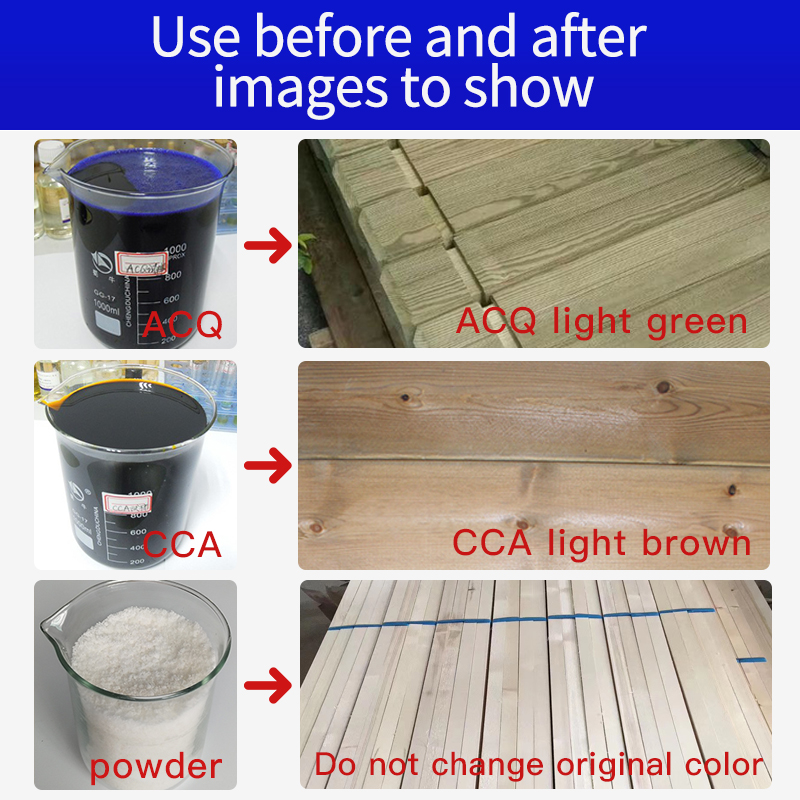
- Visual Inspection: Poles should be a uniform light green or bronze. No visible chemical crystals or new structural splits should be present.
6. Safety & Environmental Protection
- Zero Discharge: All drippage must be collected on a concrete pad and recycled into the mixing system.
- PPE: Operators must wear chemical-resistant suits, nitrile gloves, and face shields.
- Strict Rule: No eating, drinking, or smoking is permitted in the treatment or storage area.