
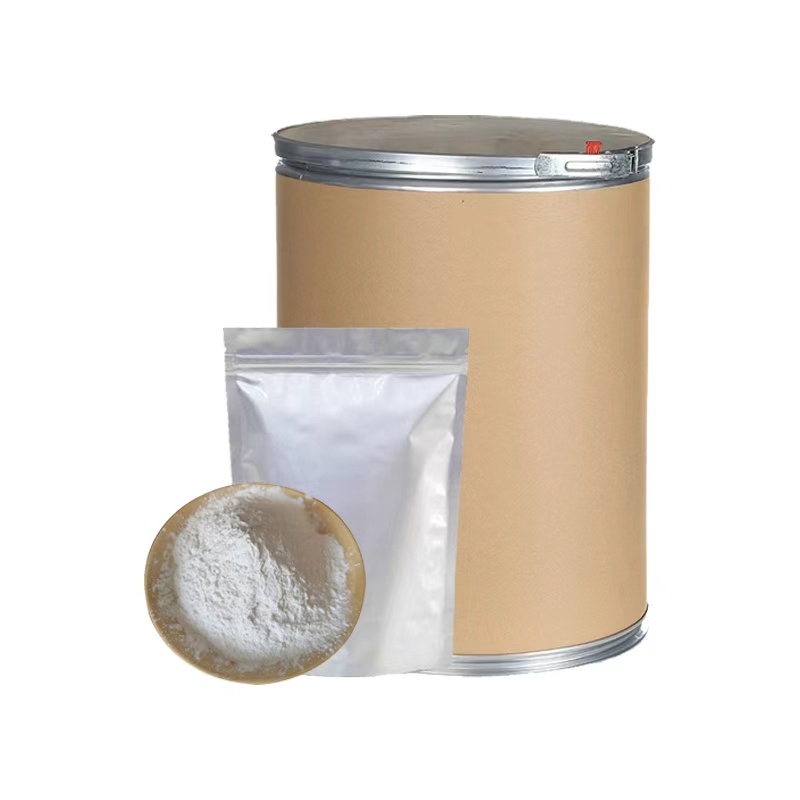

Chlorhexidine Diacetate/ Chlorhexidine Digluconate Gold Supplier
Chlorhexidine Diacetate (Chlorhexidine Acetate, CAS 56-95-1) is a biguanide compound with broad-spectrum antibacterial activity. The key information and advantages are analyzed as follows:
Chemical Properties and Physical Parameters
*Molecular formula and structure: C₂₂H₃₀Cl₂N₁₀·2C₂H₄O₂ (or C₂₆H₃₈Cl₂N₁₀O₄, with variations in notation depending on the source), consisting of two chlorophenyl biguanide groups connected by a hexane bridge, with the acetate group conferring water solubility.
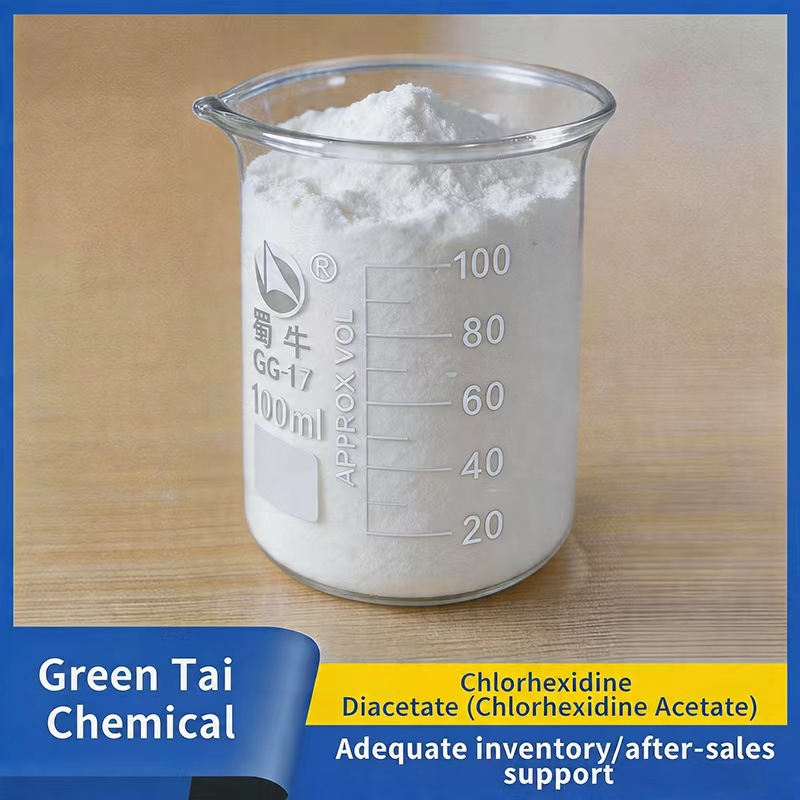
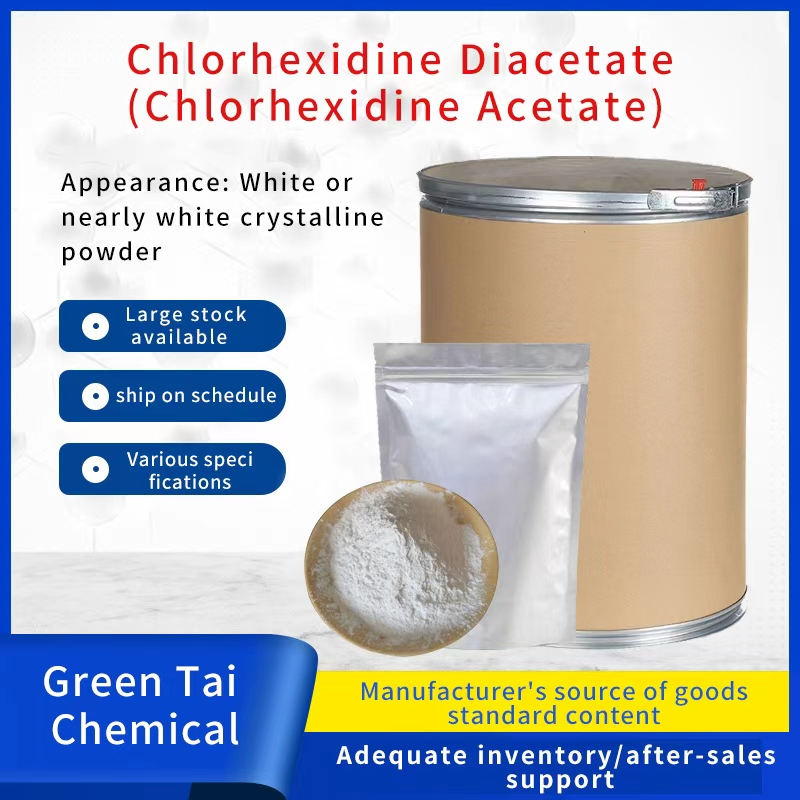
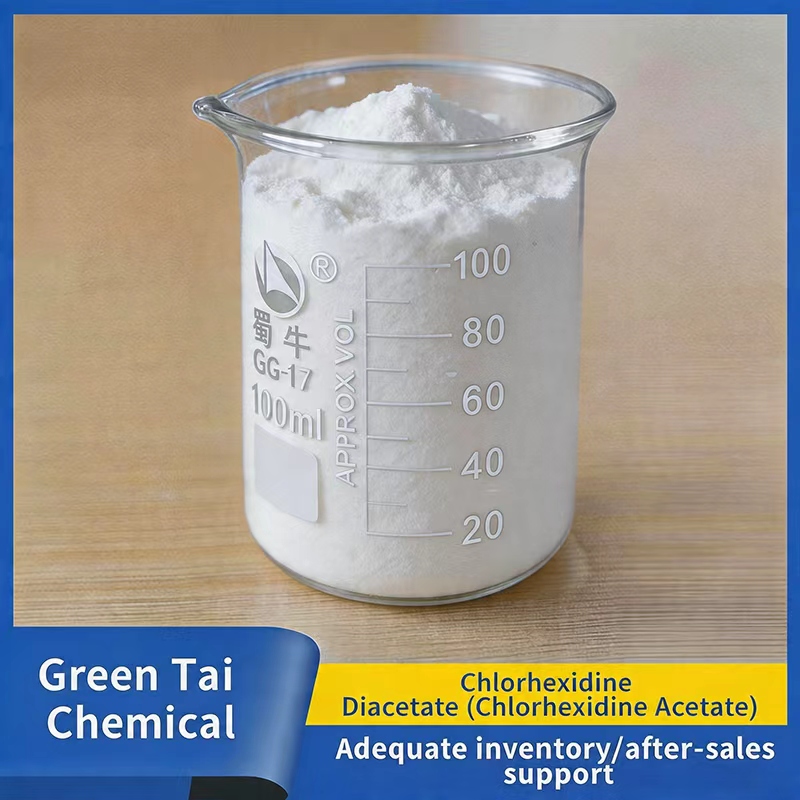
*Appearance: White or nearly white crystalline powder, odorless, with a bitter taste.
*Solubility: Solubility in water at 20°C is 1.9 g/100 ml; soluble in ethanol, slightly soluble in other organic solvents.
*Melting Point and Stability: Melting point 153–156°C; decomposes at 260–262°C; store in a light-protected, sealed container at low temperature (2–8°C).
Packaging and Nature
Scope of Application
1. Broad-spectrum antibacterial activity
*Mechanism of action: By disrupting the structure of bacterial cell membranes, causing the leakage of intracellular substances, it rapidly kills Gram-positive bacteria (such as Staphylococcus aureus), Gram-negative bacteria (such as Escherichia coli), and fungi (such as Candida albicans), and is also effective against Pseudomonas aeruginosa.
*Clinical Applications: Widely used for skin disinfection, wound irrigation, surgical instrument disinfection, preoperative hand washing (soaking in a 0.02% aqueous solution for 3 minutes), and surgical site disinfection (using a 0.5% alcohol solution).
2. Long-term stability
*Chemical stability: It remains stable under storage conditions (2–8°C). Avoid storing it with oxidizing agents or food-grade chemicals to prevent decomposition and the production of toxic nitrogen oxides and chlorine fumes.
*Application durability: Its cationic properties enable strong adsorption on skin or mucous membranes, ensuring prolonged disinfection efficacy.
3. Multi-field application
*Medical field: Used for surgical instrument disinfection (0.1% aqueous solution containing 0.5% sodium nitrite for rust prevention) and skin wound disinfection (1% spray or 0.05% aqueous solution for rinsing).
* Gynecological Treatment: Compound formulations (containing chlorhexidine gluconate and metronidazole) are used for vaginal irrigation to treat vaginitis and abnormal vaginal discharge caused by bacteria, trichomonads, and fungi.
* Oral Care: Chlorhexidine compound mouthwash is used as an adjunctive treatment for gingivitis, pericoronitis, and other conditions.
*Research and industry: Used as an organic synthesis intermediate, chemical reagent, and disinfectant/preservative in laboratory research and industrial production.