

Fire Retardant Triphenyl Phosphate TPP CAS 115-86-6
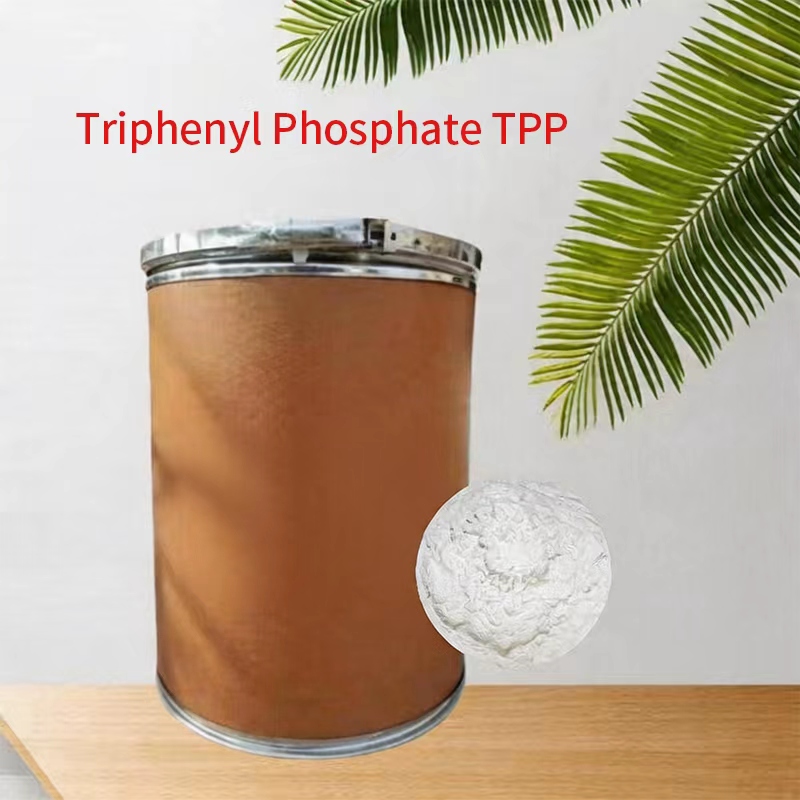
Triphenyl Phosphate (TPP), CAS No. 115-86-6, is an important organophosphate compound. The following is a detailed introduction:
Basic Information
Chinese Name: Triphenyl Phosphate, Triphenyl Phosphate, Flame Retardant TPP
English Name: Triphenyl Phosphate (TPP)
Molecular Formula: C₁₈H₁₅O₄P
Molecular Weight: 326.28-326.29
CAS No.: 115-86-6
EINECS No.: 204-112-2
Appearance: White to off-white flakes or crystals, odorless or slightly aromatic, slightly deliquescent.
Physical Properties:
-Melting Point: 47-53°C
-Boiling Point: 370°C (normal pressure), 243-245°C (distilled at 1.47 kPa)
-Flash Point: 220°C
-Vapor Pressure: 0.01 kPa (20°C)
-Solubility: Insoluble in water, slightly soluble in alcohol, soluble in benzene, chloroform, and acetone, freely soluble in ether.
-Density: 1.185-1.265 g/cm³
Chemical Properties and Reactivity
Stability: TPP is stable at room temperature, but may ignite when exposed to high heat, open flames, or contact with oxidants. Combustion products include carbon monoxide, carbon dioxide, and phosphorus oxide.
Reactivity: TPP can be prepared via an esterification reaction using phenol and phosphoric acid or phosphorus trichloride as raw materials in the presence of a catalyst (such as sulfuric acid or p-toluenesulfonic acid). Reaction conditions require controlled temperature, time, and catalyst dosage to optimize yield and quality.
TPP Chemical Properties
TPP Scope of Application
1. Flame Retardant:
TPP is a halogen-free, environmentally friendly flame retardant widely used in polymer formulations, adhesives, and sealants to improve the flame retardancy of materials.
2. Plasticizer:
As a flame retardant plasticizer for cellulose resins, vinyl resins, natural rubber, and synthetic rubber, TPP improves the tensile strength, flexibility, and oil resistance of these materials.
3. Other Applications:
-Used as a plasticizer and fire-resistant solvent for cellulose nitrate and cellulose acetate.
-Used as a sizing agent for cellulose nitrate lacquers, synthetic resins, and roofing paper.
-A camphor substitute in celluloid manufacturing.
-A raw material for the manufacture of trimethyl phosphate.
-A gas chromatography stationary phase (maximum operating temperature 175°C, solvent: diethyl ether).