Foreword
Rubberwood (Hevea brasiliensis) is highly susceptible to blue stain, mold, and insect infestation due to its high sugar and starch content. This SOP utilizes the Vacuum-Pressure Impregnation method, combining the potent sterilization of Lutai Anti-Fungal Agent with the long-lasting preservative properties of Boron compounds and the aesthetic enhancement of Bleaching agents. This process ensures deep chemical penetration, significantly improving the wood’s durability and commercial value.
1. Chemical Solution Preparation
In a mixing tank, add the chemicals in the following order while continuously stirring to prepare an aqueous solution:
- GreenTai Rubberwood Antifungal Agent: Add the appropriate concentration according to the manufacturer’s specifications to inhibit Penicillium, Aspergillus and Blue Stain.
- Borax and boric acid or GreenTai wood preservative powder: when mixed in the appropriate proportions, can comprehensively prevent rot and insects (such as powderpost beetles and termites).
- Bleaching Agent: Add an appropriate amount of hydrogen peroxide or specialized wood brighteners to unify wood color and remove processing stains.
2. Loading & Sealing
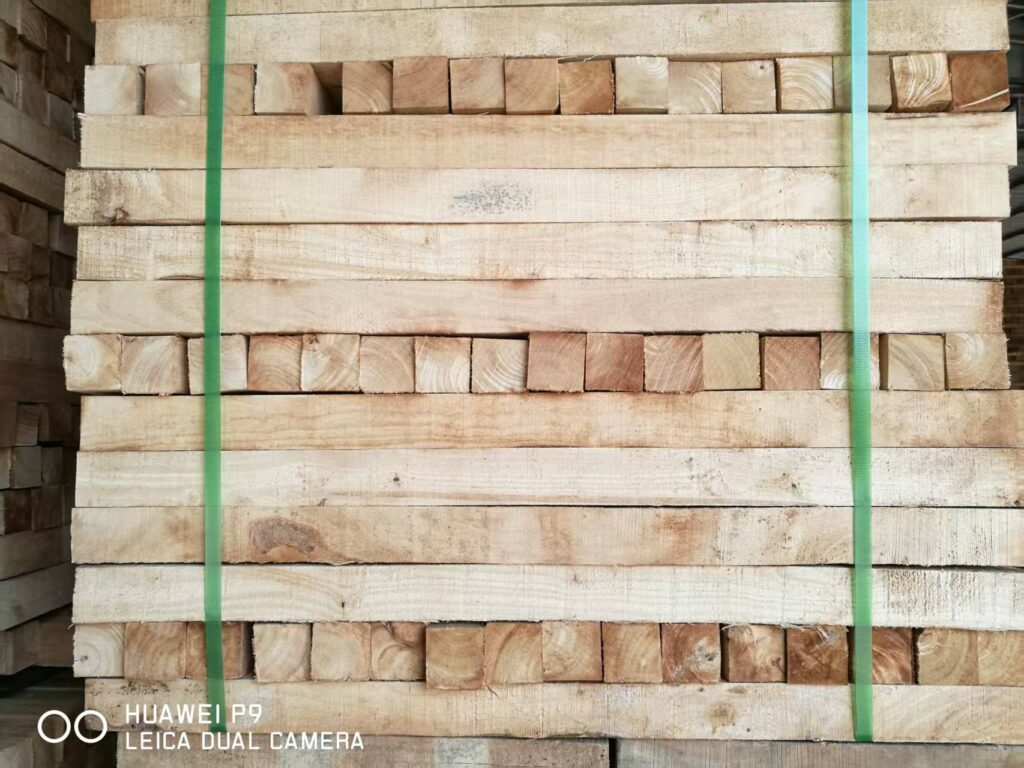
- Stacking: Use uniform spacers (stickers) between every layer of timber to ensure 360-degree chemical contact.
- Chamber Loading: Transfer the loaded trolleys into the pressure vessel (autoclave). Close and secure the door using the safety locking mechanism.
3. Initial Vacuum Phase
- Operation: Start the vacuum pump to reduce the internal pressure to -0.08 MPa to -0.09 MPa.
- Duration: Maintain for 20 – 30 minutes. This step extracts air from the wood cells to create space for the preservative.
4. Filling (Under Negative Pressure)
- Operation: While maintaining the vacuum, open the inlet valve. Use the negative pressure to draw the prepared solution into the chamber.
- Requirement: Ensure the timber is fully submerged until the chamber is completely filled.
5. High-Pressure Impregnation
- Pressurization: Activate the pressure pump, gradually increasing the pressure to 1.2 MPa – 1.5 MPa.
- Holding Time: Maintain pressure for 1.5 – 3 hours (depending on timber thickness).
- Objective: Force the Lutai agent and Boron compounds deep into the heartwood of the rubberwood.
6. Pressure Release & Recovery
- Operation: Gradually release the pressure to atmospheric levels. Pump the excess solution back into the storage tank for recycling.
7. Final Vacuum Phase
- Operation: Re-establish a vacuum of approximately -0.08 MPa for 10 – 15 minutes.
- Objective: Remove excess surface chemicals to minimize “dripping” and facilitate faster surface drying.
8. Post-Treatment & Kiln Drying (KD)
- Drip-Dry: Allow the treated timber to rest in a sheltered, ventilated area for 24 hours.
- Kiln Drying: Transfer to the drying kiln to reduce moisture content to 8% – 12%. This stage is critical for the chemical “fixation” within the wood fibers and ensures the total elimination of residual insect larvae.
Key Precautions
- Solution Maintenance: Regularly replenish chemicals to maintain target concentrations. Periodically clean the mixing tank to remove sediment that may deactivate the bleaching agent.
- Safety & PPE: Operators must wear chemical-resistant gloves, goggles, and masks to avoid direct contact with the solution.
- Environmental Compliance: Although Boron compounds are relatively eco-friendly, ensure the facility has proper seepage control to prevent soil contamination.
Contact information for wood chemical factories:
Email: enzo@szgreentai.com
WhatsApp: +86 18902458567